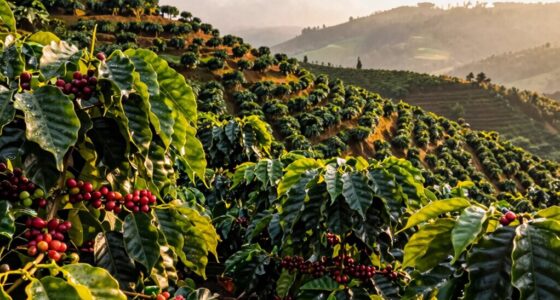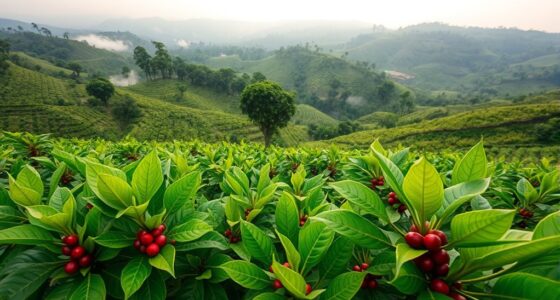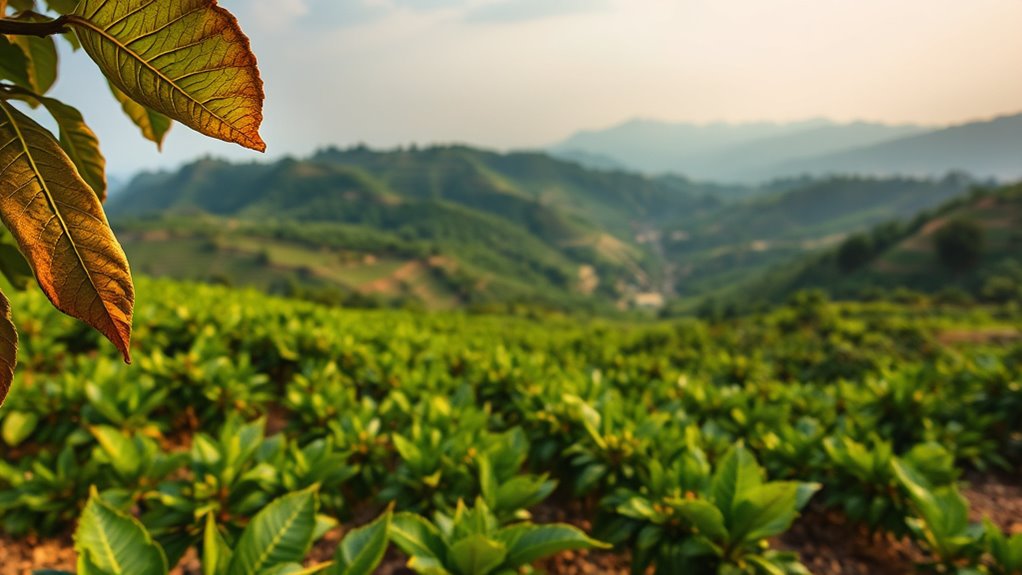

Climate change threatens your favorite coffee by destabilizing traditional growing regions. Rising temperatures and unpredictable weather make these areas less suitable for cultivation, risking land loss for farmers. To cope, farmers adopt strategies like shifting to resilient varieties, creating microclimates, and moving to higher altitudes. However, implementing these solutions requires significant effort and support. If you keep exploring, you’ll discover more about how climate change impacts coffee and what can be done to protect it.

Get coffee and tea gear delivered free with Prime
- Fast, free delivery on millions of items
- Prime Video, Amazon Music and more included
- Member-only deals all year
Key Takeaways
- Rising temperatures threaten the suitability of traditional coffee-growing regions.
- Unpredictable weather patterns cause crop instability and increased risks for farmers.
- Farmers may need to shift cultivation to higher altitudes or adopt resilient varieties.
- Water scarcity and microclimate changes impact coffee yields and quality.
- Effective adaptation requires significant investment, technical support, and proactive climate strategies.
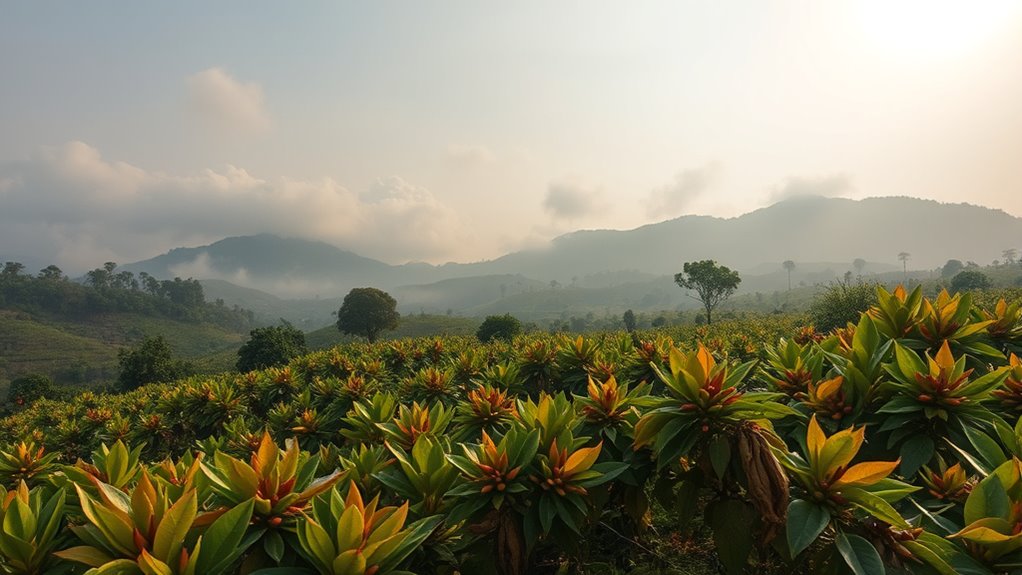
Have you ever wondered how climate change is affecting your morning coffee? As global temperatures rise and weather patterns grow unpredictable, the coffee industry faces serious challenges. Coffee crop resilience becomes a crucial concern for farmers trying to maintain their harvests amidst these shifting conditions. Rising temperatures can cause traditional coffee-growing regions to become less suitable for cultivation, forcing farmers to confront the reality that their once-reliable land may no longer produce the beans they’ve cultivated for generations. To adapt, farmers are adopting a range of strategies aimed at preserving their livelihoods and ensuring coffee remains part of their communities. These strategies include switching to more resilient coffee varieties, altering planting schedules, and investing in shade-grown coffee to mitigate temperature extremes.
You might not realize it, but farmer adaptation strategies are essential to maintaining coffee production in the face of climate change. For instance, some farmers are shifting their cultivation to higher altitudes where cooler temperatures can help safeguard their crops. Others are experimenting with drought-resistant coffee strains that can withstand harsher weather conditions. These efforts are not always straightforward; they require significant knowledge, investment, and sometimes trial and error. Nonetheless, such adaptation strategies are crucial for improving coffee crop resilience, giving farmers a fighting chance against unpredictable weather patterns and pests that thrive in warmer climates.
Moreover, farmers are also adopting innovative water management techniques to combat droughts and irregular rainfall, which threaten crop yields. Shade trees are increasingly used not just to protect plants from excessive heat but also to improve soil health and moisture retention. This integrated approach helps create microclimates that support coffee growth despite environmental stresses. However, these adaptation strategies aren’t foolproof; they often demand resources, technical expertise, and support that many small-scale farmers lack. Governments, NGOs, and coffee industry stakeholders are stepping in to provide training and financial assistance, but the scale of the challenge remains formidable.
Ultimately, the resilience of coffee crops depends heavily on how quickly and effectively farmers can implement these adaptation measures. Their ability to respond proactively will determine whether coffee can survive in traditional regions or if cultivation will shift to new areas. As a coffee lover, understanding these efforts highlights the importance of supporting sustainable practices and climate resilience initiatives. Your favorite brew’s future depends on the resilience of farmers and their capacity to adapt to an ever-changing climate. The more you learn about these challenges, the better you can appreciate the effort behind each cup and advocate for solutions that sustain coffee production for generations to come.
As an affiliate, we earn on qualifying purchases.
Frequently Asked Questions
How Are Coffee Farmers Adapting to Climate Change?
You’re likely noticing how coffee farmers adapt by shifting practices like planting shade-grown coffee, which helps manage temperature and preserve soil health. They also improve pest management strategies, using natural predators and organic methods to reduce chemical reliance. These adaptations protect crops from climate impacts, ensuring sustainability. By embracing shade-grown coffee and innovative pest control, farmers build resilience against changing weather patterns and safeguard their livelihoods.
What New Coffee Varieties Are Being Developed for Changing Climates?
You should know that researchers are developing new coffee varieties to handle changing climates. These include drought-resistant coffee plants, which can withstand dry conditions better, and shade-grown varieties that thrive under canopy cover, helping manage temperature and moisture levels. By focusing on these innovations, you can support sustainable coffee farming and enjoy your favorite brew even as environmental conditions shift.
How Does Climate Change Affect Coffee Bean Quality?
You might notice climate change impacts coffee bean quality through soil degradation, which reduces nutrient availability and hampers growth. Pest proliferation also worsens, leading to damage and inconsistent beans. These factors cause beans to develop uneven flavors and lower caffeine content, affecting your coffee experience. As temperatures rise and weather patterns shift, these issues intensify, making it harder to produce high-quality coffee without sustainable practices and adaptation strategies.
Are There Any Economic Subsidies for Climate-Resilient Coffee Farming?
Think of climate-resilient coffee farming like planting a sturdy tree in stormy weather. You might find government grants and insurance programs acting as your shelter, offering financial support and protection. These subsidies encourage you to adopt sustainable practices, helping you withstand unpredictable weather. By accessing these resources, you can secure your farm’s future, ensuring your coffee remains resilient and profitable despite shifting climate conditions.
What Role Do Global Policies Play in Protecting Coffee Regions From Climate Impacts?
Global policies, like international agreements and trade policies, play a vital role in protecting coffee regions from climate impacts. They can promote sustainable farming practices, provide funding, and set standards that encourage climate resilience. By participating in these policies, you help guarantee that coffee producers adopt environmentally friendly methods, improve resilience, and safeguard local economies. Strong global cooperation can make a real difference in preserving coffee regions for future generations.
Conclusion
You might think that coffee’s fate is uncertain, but scientific studies confirm that climate change critically threatens traditional coffee regions. Rising temperatures and unpredictable weather patterns are already reducing yields and altering growing conditions. If you value your morning brew, it’s essential to support sustainable practices and advocate for policies that combat climate change. Without action, this beloved beverage could become a rare luxury, emphasizing how urgent it is to address these environmental threats now.
Halloween Picks
halloween
As an affiliate, we earn on qualifying purchases.