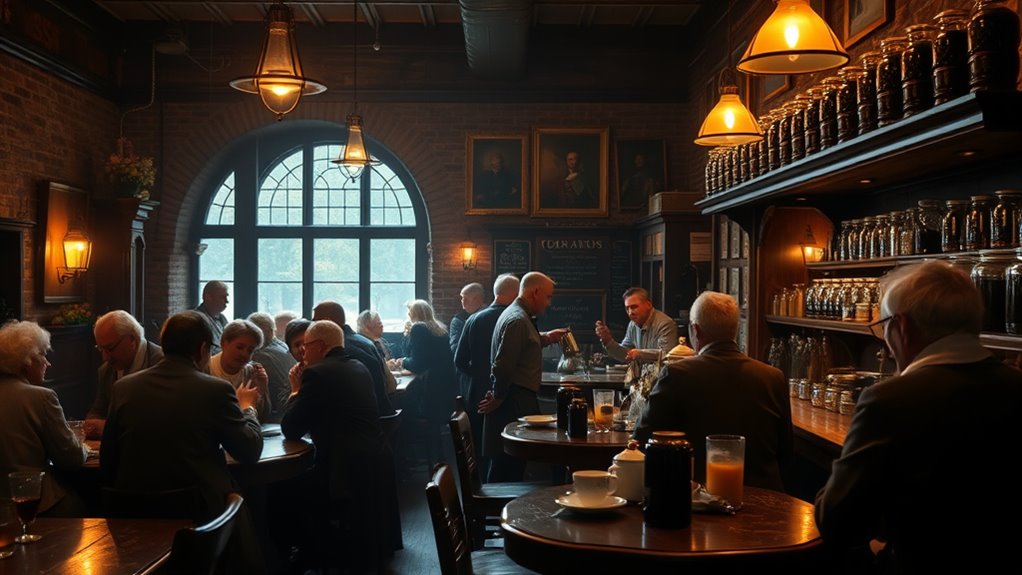

Coffee houses first appeared in Constantinople in the 1470s, serving as lively hubs for socializing, exchanging ideas, and debate. They spread through the Ottoman Empire into Persia and the Middle East, becoming cultural landmarks where diverse groups gathered. Despite opposition from authorities concerned about disorder, these spaces persisted and influenced social and political discussions. If you want to discover more about how coffee houses shaped history, there’s plenty more to explore.
Key Takeaways
- The first coffeehouse, Kiva Han, opened in Constantinople in the 1470s, serving as social and intellectual hubs.
- Coffeehouses spread through the Ottoman Empire, Persia, and the Middle East, becoming centers for social and political discussion.
- Despite opposition from authorities, coffeehouses persisted, adapting to cultural norms and maintaining their social significance.
- They facilitated diverse social interactions, influencing public opinion and contributing to political and cultural movements.
- Today, coffeehouses continue as vital spaces for community, debate, and cultural exchange worldwide.
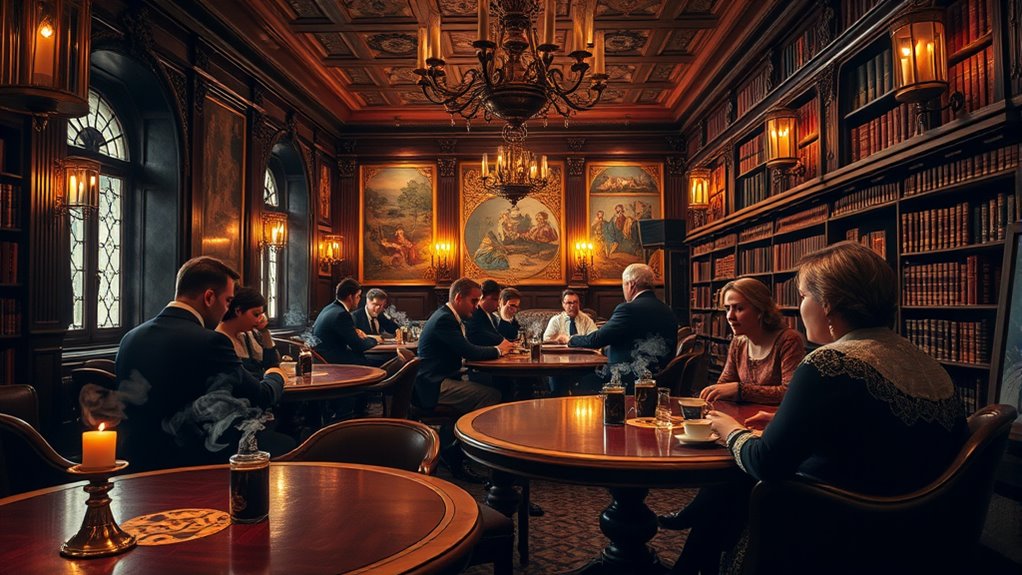
Have you ever wondered how coffeehouses became essential social spaces? The story begins in Constantinople during the 1470s, where the first recorded coffeehouse, Kiva Han, opened its doors. From the start, coffeehouses served as social hubs, places where people gathered not just to drink coffee but to connect, exchange ideas, and engage in lively debate.
These venues quickly became integral to the cultural fabric, reflecting the traditions and values of their regions. As the Ottoman Empire expanded, spreading coffee across Persia and into the broader Middle East, the role of coffeehouses grew even more crucial. They transformed into centers for social, religious, and political discussion, acting as venues where citizens could voice opinions and challenge authority, all under the guise of community gathering.
Coffeehouses became vital cultural centers, fostering social, religious, and political dialogue across expanding Ottoman territories.
Despite their popularity, coffeehouses often faced opposition from authorities worried about disorder and sedition. Governments and religious leaders sometimes shut them down, fearing they could become hotbeds for dissent. Still, these interruptions didn’t diminish their importance. Coffeehouses persisted, adapting through centuries and cultures, maintaining their status as essential spaces for community interaction.
In many ways, they became symbols of a cultural tradition rooted in the history of social engagement—places where ideas could be exchanged freely, and social bonds strengthened.
The spread of coffee and the rise of coffeehouses were more than just a matter of taste; they marked a shift in social dynamics. These venues allowed a diverse cross-section of society to come together—merchants, scholars, artists, and common folk—all united by their love for coffee and conversation.
Their role as venues for debate and political discussion helped shape public opinion and even contributed to political movements. Over time, the tradition of community gathering in coffeehouses became a defining feature of many societies, influencing social norms and cultural practices.
Today, coffeehouses continue this legacy, still serving as spaces for connection, discussion, and cultural exchange. Their history showcases how something as simple as a cup of coffee could foster community, spark debate, and reflect societal values.
From their origins in Constantinople to their widespread influence across continents, coffeehouses have remained enduring symbols of social interaction and cultural tradition. They remind us that, throughout history, shared spaces for conversation and community have always played a significant role in shaping society.

Veken French Press Coffee Maker, No Plastic Touching Cafe,34oz 1 L Cafetera
- Plastic-Free Brewing Surface: Made with stainless steel and silicone
- Durable Heat-Resistant Glass: High borosilicate glass up to 360°F
- Versatile Brewing Options: Suitable for hot coffee, cold brew, tea
As an affiliate, we earn on qualifying purchases.
As an affiliate, we earn on qualifying purchases.
Frequently Asked Questions
What Is the History of Coffee Houses?
You’re curious about the history of coffee houses, which started in the 15th century in Constantinople. These places became social hubs for debate, news, and politics.
They spread across the Middle East and Europe. Known as “penny universities,” they offered affordable intellectual stimulation.
Over time, they influenced finance and social life, shaping institutions like Lloyd’s of London.
Coffee houses evolved into crucial spaces for community and commerce, leaving a lasting legacy.
Who Was the Founder of Coffee Houses?
You wonder who founded coffee houses, but there’s no single person behind their creation. Instead, they evolved organically over time, driven by merchants, social groups, and travelers.
Early records suggest places like Constantinople’s Kiva Han played a role, but no specific individual can be credited.
You can think of coffee houses as a societal development that grew gradually, shaped by many people rather than a single founder.
Were Coffeehouses Common in the 1700S?
You’re wondering if coffeehouses were common in the 1700s. Yes, they were. In England, there were thousands, serving as social, political, and business hubs.
These establishments, called “penny universities,” attracted people from all walks of life. They promoted sober conversation, debate, and reading, setting themselves apart from taverns.
Notable institutions like Lloyd’s of London and the London Stock Exchange started there, highlighting their importance during that era.
What Were the Coffeehouses in Penny Universities History?
In penny universities, you find lively coffeehouses where a single penny gets you a cup of coffee. These places serve as hubs for socializing, exchanging ideas, and conducting business.
You can stay for hours, reading newspapers or debating with others. Famous spots like Lloyd’s of London and Jonathan’s influenced commerce and social networks.
These coffeehouses offered affordable entertainment and learning, making them essential parts of 18th-century social life.
Conclusion
Now that you know the rich history of coffee houses, you can appreciate how they’ve evolved from lively social hubs to modern gathering spots. Every cup you enjoy connects you to centuries of culture, commerce, and conversation. So next time you sip your coffee, remember you’re part of a tradition that’s brought people together for centuries. It’s more than just a drink — it’s a shared experience that continues to shape societies around the world.