Responsible coffee tourism lets you enjoy high-quality coffee while supporting sustainable farms and local communities. When you visit farms and cafés, you participate in environmentally friendly practices like organic farming and shade-grown coffee, which help protect the land and promote biodiversity. You also contribute to local social development through fair wages and community programs. If you want to discover how your choices can make a positive impact, there’s more to explore below.
Key Takeaways
- Visiting sustainably operated farms supports environmentally friendly practices like shade-grown coffee and organic farming.
- Tours and workshops create local employment opportunities and promote community development.
- Purchasing coffee from eco-conscious cafés with Fair Trade or Rainforest Alliance certification encourages ethical supply chains.
- Engaging in responsible tourism helps preserve biodiversity, soil health, and local culture.
- Supporting sustainable farms and cafés ensures the longevity of environmentally friendly coffee production.
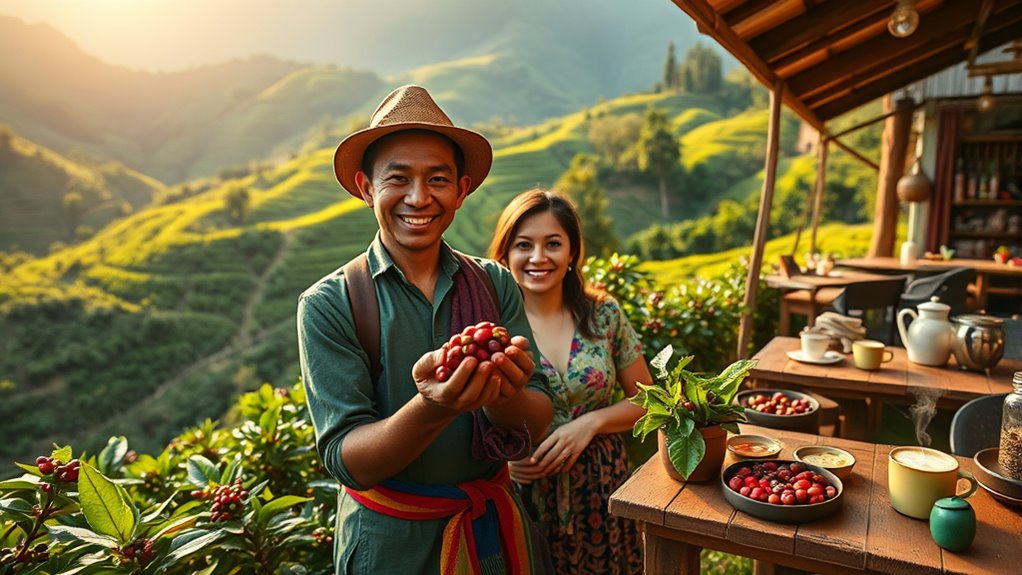
Responsible coffee tourism offers travelers a chance to enjoy their favorite brew while supporting sustainable practices in coffee-growing communities. When you choose to visit coffee farms and cafés with a focus on sustainability, you’re not just indulging in a delicious cup—you’re contributing to the well-being of local communities and the environment. Many farms that welcome visitors have adopted sustainable practices that minimize environmental impact, conserve water, reduce chemical use, and promote biodiversity. By engaging with these farms, you get a firsthand look at how they protect their land and resources, ensuring that coffee production remains feasible for future generations.
Supporting sustainable coffee farms helps protect communities and the environment for future generations.
Community engagement is a core component of responsible coffee tourism. When you participate in tours or workshops offered by local coffee farmers, you’re helping to boost the local economy and foster social development. These farms often involve community members in their initiatives, creating opportunities for employment and skill development. Your visit can support fair wages and better living conditions for farmers and their families. Many coffee farms also invest in local infrastructure, education, and health programs as part of their community engagement efforts. By choosing to visit these farms, you become part of a network that values equitable growth and cultural preservation.
As you explore coffee farms, you’ll learn about sustainable agricultural techniques such as shade-grown coffee, organic farming, and composting. These methods not only produce high-quality beans but also help protect the environment by reducing the need for harmful chemicals and promoting soil health. Many farms actively involve local communities in these environmentally friendly practices, providing training and resources that empower farmers to implement sustainable solutions. Your presence and interest can motivate farms to continue these efforts and expand their sustainable initiatives. Additionally, understanding shaded coffee cultivation can help you appreciate how coffee farms preserve biodiversity and reduce their carbon footprint.
Visiting eco-conscious cafés also plays a crucial role in responsible coffee tourism. These cafés often source their beans directly from farmers committed to sustainable practices, ensuring that your coffee purchase supports ethical supply chains. Many cafés participate in certifications like Fair Trade or Rainforest Alliance, further guaranteeing that the farmers receive fair compensation and that environmental standards are upheld. When you order a coffee at such a place, you’re supporting a model that values community well-being and environmental health.
Ultimately, responsible coffee tourism allows you to enjoy a great cup of coffee while making a positive impact. By choosing farms and cafés that prioritize sustainable practices and community engagement, you help foster a more equitable and environmentally friendly coffee industry. Your journey becomes more than just tasting coffee—it becomes an act of support for the people and places behind each cup.
Frequently Asked Questions
How Can I Verify a Farm’s Sustainability Practices?
You can verify a farm’s sustainability practices by checking for organic certification and fair trade standards. Look for official labels on their products or website, which indicate adherence to eco-friendly and fair labor practices. Ask the farm directly about their sustainability efforts, and research reviews or third-party audits. These steps help guarantee the farm truly commits to responsible practices, giving you confidence in your coffee tourism experience.
What Are the Best Times to Visit Coffee Farms?
You won’t believe the perfect time to visit coffee farms, as it’s truly a coffee lover’s dream! The best visiting seasons align with seasonal harvests, usually during the dry season when beans are picked and processed. Typically, this is late fall to early spring, depending on the region. Visiting during these peak times gives you a front-row seat to the vibrant harvest activities and a deeper understanding of coffee cultivation.
Are There Eco-Friendly Transportation Options for Tours?
Yes, eco-friendly transportation options are available for tours. You can rent electric bikes, which allow you to explore farms sustainably while enjoying the scenery. Shared shuttles are also a great choice, reducing your carbon footprint and providing convenient group transport. These options help you experience coffee farms responsibly, supporting eco-friendly practices and minimizing environmental impact during your visit.
How Do I Ensure My Visit Supports Local Communities?
Imagine your footsteps gently nurturing a thriving community. To truly support local communities, choose tours that prioritize community involvement and hold fair trade certification. Engage with farmers and artisans, learning their stories and respecting their traditions. Your mindful visits guarantee fair wages and sustainable practices, helping villages flourish. By making thoughtful choices, you become part of a positive ripple effect, fostering growth and harmony in the places you explore.
What Safety Precautions Should I Take During Tours?
You should wear appropriate safety gear like sturdy shoes and hats, and listen carefully to guides’ instructions. Always stay within designated areas and avoid risky shortcuts. Carry emergency contacts and a fully charged phone in case of unexpected situations. Stay alert, follow safety protocols, and ask questions if you’re unsure about anything. By taking these precautions, you’ll guarantee a safe, enjoyable tour that respects the farm’s environment and staff.
Conclusion
Think of responsible coffee tourism as a gentle dance between you and the farms, where each step supports and uplifts. As you wander through lush fields and cozy cafés, remember you’re weaving a tapestry of care and connection. Every sip, every visit, becomes a ripple in a pond of positive change. By choosing thoughtfully, you’re not just tasting coffee—you’re nurturing a future where every bean tells a story of respect and sustainability.