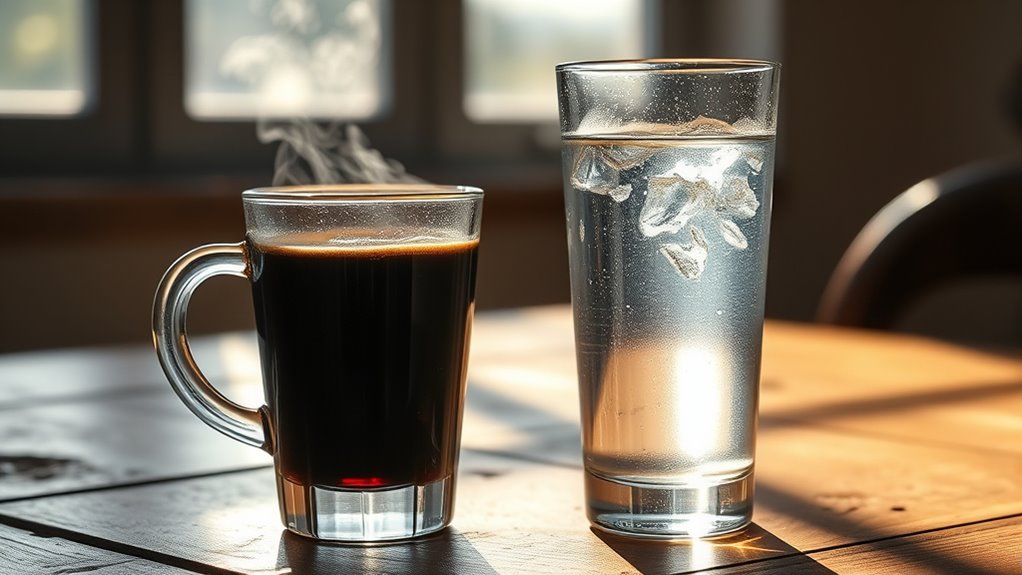

When you enjoy coffee, remember its caffeine acts as a mild diuretic, encouraging more urination. However, if you drink it regularly, your body adapts, and dehydration risks decrease. To stay well-hydrated, balance your coffee with plenty of water and hydrating foods. Watch for signs of dehydration like dry mouth or dark urine, and adjust your intake accordingly. Keep these tips in mind, and you’ll learn ways to enjoy coffee without sacrificing hydration.
Key Takeaways
- Moderate coffee intake generally does not cause dehydration due to body adaptation to caffeine.
- Drinking water alongside coffee helps offset mild diuretic effects and maintains hydration.
- Spreading out coffee consumption throughout the day supports better fluid balance.
- Recognizing dehydration signs like dry mouth and dark urine allows timely water intake.
- Balancing caffeine with adequate water intake ensures hydration without compromising caffeine enjoyment.
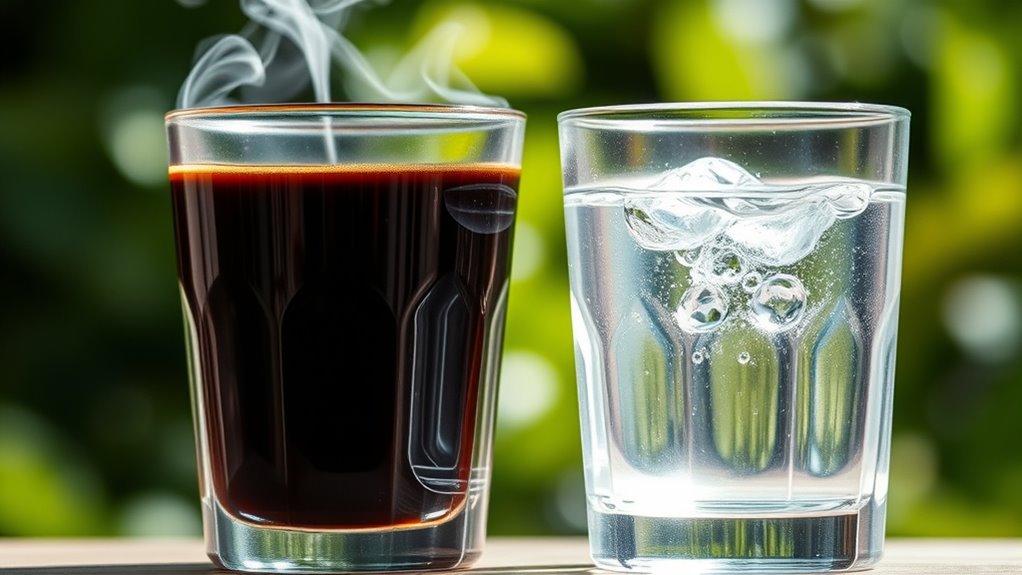
Ever wondered if your daily coffee habit affects your hydration? It’s a common concern, especially if you rely on coffee to start your mornings or power through busy afternoons. The truth is, your coffee intake does influence your hydration levels, but not in the way many assume. While caffeine has diuretic properties, moderate coffee consumption doesn’t necessarily lead to dehydration. Instead, understanding how to balance your coffee intake with effective hydration strategies can help keep you feeling your best.
Moderate coffee intake doesn’t cause dehydration; balance it with proper hydration for optimal health.
When you sip coffee, caffeine acts as a mild diuretic, encouraging your kidneys to produce more urine. This might make you think that drinking coffee dehydrates you, but the reality is more nuanced. Your body quickly adapts to regular caffeine consumption, so the diuretic effect diminishes over time for habitual drinkers. If you’re drinking several cups a day, your body adjusts, and coffee no longer causes significant fluid loss. However, if you’re not used to caffeine or consume large quantities in a short period, you might notice increased urination and a feeling of dehydration.
To maintain proper hydration while enjoying your coffee, it’s essential to incorporate hydration strategies into your daily routine. One straightforward approach is to balance your coffee intake with plenty of water throughout the day. For every cup of coffee you drink, consider drinking an equal amount of water. This helps offset the mild diuretic effect and ensures your body stays well-hydrated. Additionally, spreading out your coffee consumption rather than drinking several cups in a short span can help your body better manage fluid levels.
Another strategy involves paying attention to your body’s signals. If you notice signs of dehydration—such as dry mouth, dark urine, or fatigue—it’s a good idea to increase your water intake. Remember, coffee can be part of your hydration plan, but it shouldn’t replace water as your main source of fluids. Incorporating hydrating foods like fruits and vegetables can also boost your overall water intake without added effort. Moreover, recent research highlights the importance of understanding the role of hydration in health, which underscores that balancing fluids is key to well-being.
Ultimately, the key to balancing diuretics and water lies in moderation and mindful hydration habits. You don’t have to give up your beloved coffee, but understanding how to manage your coffee intake and combining it with effective hydration strategies can make a significant difference. By doing so, you ensure that your caffeine habit doesn’t interfere with your hydration needs, keeping you energized without compromising your health.

Sahara Sailor Water Bottle 32oz, Durable and Leakproof Water Bottles Motivational with Time Marker, Tritan, BPA Free, Wide Mouth with Easy Clean Brush for Gym, Travel, Home, School, Office (1 Bottle)
- Hydration Tracking with Time Marker: Helps monitor daily water intake
- Leakproof Flip-Lock Lid: Secure, one-handed opening and leak prevention
- BPA Free Tritan Material: Safe, non-toxic, and durable
As an affiliate, we earn on qualifying purchases.
As an affiliate, we earn on qualifying purchases.
Frequently Asked Questions
Can Coffee Intake Affect Long-Term Hydration Status?
Yes, your coffee intake can affect long-term hydration status. While coffee acts as a diuretic, moderate consumption generally doesn’t compromise your hydration balance because your body adapts. However, excessive coffee intake may lead to fluid loss and reduce fluid retention over time. To maintain proper hydration, balance your coffee consumption with plenty of water, especially if you’re concerned about fluid retention or long-term hydration health.
Does Adding Milk or Cream Change Coffee’s Diuretic Effects?
Adding dairy additives like milk or cream to your coffee slightly reduces its diuretic effects because they contribute water and nutrients, softening the beverage’s dehydrating impact. This change in beverage formulation helps your body retain more water. While it doesn’t eliminate diuretic effects entirely, incorporating dairy can make your coffee less dehydrating and support better hydration, especially if you consume it regularly throughout the day.
How Much Coffee Is Safe Before Dehydration Risk Increases?
You can typically enjoy up to 400 mg of caffeine daily without risking dehydration, which is about four cups of coffee. But your caffeine tolerance matters—some people process it faster, while others are more prone to dehydration. Remember, hydration myths suggest coffee is a diuretic, but moderate intake usually doesn’t cause dehydration. Listen to your body, stay hydrated, and enjoy your coffee in moderation to avoid risks.
Are Certain Types of Coffee Less Dehydrating Than Others?
Certain coffee types, like those brewed with French press or espresso, may be slightly less dehydrating due to higher concentration of antioxidants, but the diuretic effect remains similar across brewing methods. Coffee bean varieties, such as Arabica versus Robusta, can influence caffeine content, affecting dehydration risk. Ultimately, regardless of type, moderation is key—drinking plenty of water alongside your coffee helps maintain proper hydration.
Can Coffee Consumption Improve Hydration in Athletes?
Think of coffee as a double-edged sword; it can both hydrate and dehydrate you. While moderate coffee consumption can contribute to your hydration, it shouldn’t replace water. As an athlete, you should prioritize hydration strategies that include water and coffee alternatives like herbal teas. To optimize hydration, balance your coffee intake with plenty of water, especially during intense activity, ensuring your body stays fueled and ready for performance.
Conclusion
So, when it comes to hydration and coffee, remember this: enjoy your coffee, but also drink water. Balance your caffeine intake with hydration, and stay mindful of your body’s signals. Drink water to refresh, hydrate to sustain, and enjoy your coffee without guilt. By balancing diuretics and water, you create harmony in your hydration routine—nourishing your body, fueling your day, and keeping you energized. Keep this balance, and stay well-hydrated.