
To guarantee consistent espresso quality, check your grinder’s burrs regularly for wear like dull edges or chipping, and replace them when needed. Proper alignment is essential—misaligned burrs cause uneven grind particles, leading to flavor issues. Regular calibration and maintenance help prevent uneven extraction and reduce wear, extending burr life. If you want to keep your espresso at its best, understanding proper calibration and timely burr replacement is key—there’s more to learn on maintaining your grinder’s performance.

Get coffee and tea gear delivered free — and shop member deals
- Fast, free delivery on millions of items
- Access to Prime Big Deal Days deals on October 6–7
- Prime Video, Amazon Music and more included
Key Takeaways
- Proper alignment calibration ensures even, consistent grind size critical for optimal espresso extraction.
- Regular inspection of burrs helps identify wear signs like dullness or chipping that affect grind quality.
- Using high-quality burr materials (stainless steel or ceramic) extends lifespan and maintains precise grinding performance.
- Burr misalignment causes uneven particle size, leading to flavor inconsistencies and over- or under-extraction.
- Timely replacement of worn burrs preserves grinder efficiency, flavor, aroma, and overall espresso quality.

If you want to brew the perfect espresso, choosing the right grinder burrs is indispensable. The quality of your espresso largely depends on how well your burrs grind the beans, and that starts with understanding the significance of burr material and alignment calibration. Burr material directly impacts durability and grind consistency. Common options include stainless steel, ceramic, and sometimes even composite materials. Stainless steel burrs are highly durable and resistant to wear, making them a popular choice for home baristas who want longevity. Ceramic burrs, on the other hand, stay sharp longer and produce a more uniform grind, but they can be more brittle and prone to chipping if handled roughly. When selecting burrs, consider your usage frequency and budget, but remember that investing in high-quality burr material pays off over time by maintaining consistent grind size, which is essential for espresso extraction.
Alignment calibration is another pivotal factor that affects the performance of your grinder burrs. Proper calibration ensures that the burrs are aligned correctly, providing an even, consistent grind. Misaligned burrs can cause uneven particle sizes, leading to over-extraction or under-extraction, which compromises flavor and aroma. Regularly checking and calibrating your burr alignment helps maintain ideal performance. Many grinders come with built-in calibration tools or adjustment mechanisms, but it’s key to follow the manufacturer’s instructions precisely. Even slight misalignments can result in inconsistent espresso shots, so dedicating time to calibration is worth the effort. When you notice a decline in flavor quality or a change in grind size, it’s a sign that your burrs might need realignment or replacement.
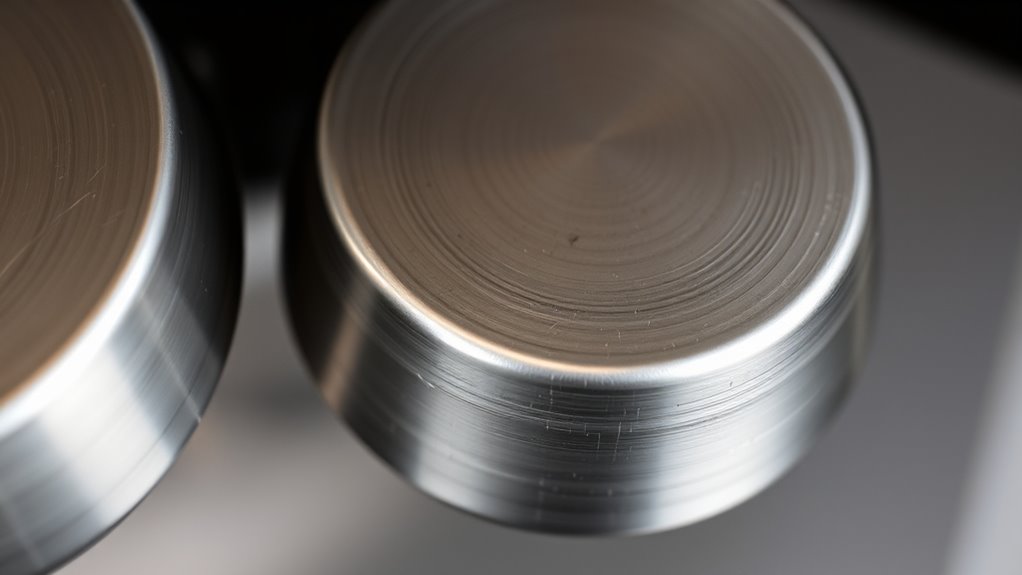
Wear is another aspect that’s closely tied to both burr material and calibration. Over time, burrs will wear down, especially if you’re grinding frequently or using beans that contain a lot of minerals or debris. Once burrs become dull, they won’t produce the same precise grind, leading to poorer espresso quality. Monitoring burr wear involves inspecting the edges for signs of dullness or chipping and replacing them when necessary. Proper alignment also minimizes unnecessary wear, as misaligned burrs can cause uneven grinding, increasing strain and accelerating deterioration. Maintaining your burrs through regular calibration and timely replacement ensures your grinder continues to perform at its best. When you upgrade or replace burrs, choose high-quality materials suited for espresso, and always calibrate properly afterward to restore perfect alignment. This attention to detail will keep your espresso consistently flavorful, with the ideal body, aroma, and crema you’re aiming for.
espresso grinder burr replacement
As an affiliate, we earn on qualifying purchases.
As an affiliate, we earn on qualifying purchases.
Frequently Asked Questions
How Do I Identify Worn Grinder Burrs?
You can identify worn grinder burrs by noticing signs like inconsistent grind sizes or uneven extraction. Check for burr wear signs such as chipped or rounded edges, which indicate they’re past their prime. During alignment troubleshooting, if your grind is uneven or inconsistent despite proper adjustments, worn burrs might be the culprit. Regularly inspecting and replacing burrs guarantees peak performance and consistent espresso quality.
Can Misaligned Burrs Cause Inconsistent Espresso Extraction?
Misaligned burrs can turn your espresso shot into a wild roller coaster ride, causing inconsistent extraction. When burr alignment is off, the grind size varies unpredictably, disrupting your espresso’s smooth flow. This inconsistency affects flavor and aroma, making it hard to achieve that perfect crema. Ensuring proper burr alignment stabilizes the grind, leading to more consistent espresso extraction and a richer, more balanced cup every time.
How Often Should I Replace My Espresso Grinder Burrs?
You should replace your espresso grinder burrs every 1-3 years, depending on burr material and usage. Harder materials like ceramic last longer, while softer metals may need replacing sooner. Regular cleaning, ideally after every few uses, helps prevent buildup that accelerates wear. Keep an eye on grind consistency and signs of dullness—if your espresso extraction becomes inconsistent, it’s time for new burrs.
What Tools Are Needed to Align Grinder Burrs Accurately?
You need a calibration gauge, a feeler gauge, and a flat, clean surface to align your grinder burrs accurately. Begin with calibration procedures to guarantee proper spacing and consistent grind size. Carefully adjust the burrs using your tools to maintain grinding consistency, checking alignment often. Proper tools help you achieve precise burr positioning, which improves espresso quality and extends the lifespan of your grinder. Always follow manufacturer instructions for best results.
Are There Differences Between Flat and Conical Burrs Regarding Wear?
Yes, flat and conical burrs differ in wear patterns. Flat burrs tend to wear more evenly, maintaining grinding consistency longer, especially if made from durable burr material like ceramic or hardened steel. Conical burrs might wear faster at the edges, affecting grind uniformity over time. Regularly inspecting your burrs helps you spot wear early, ensuring consistent espresso quality and ideal grinding performance.
Conclusion
So, after all this fuss about wear and alignment, you’d think keeping your grinder perfect was a full-time job. But in truth, it’s surprisingly simple—just a quick check now and then. Irony? The more you care, the less you have to fuss. Your espresso might just thank you for not obsessing over every tiny burr imperfection. After all, even the best burrs wear out, but that doesn’t mean your mornings have to suffer.
Fall Picks
fall essentials
As an affiliate, we earn on qualifying purchases.